Ion Works Ltd

Ion Works Ltd

  • Home
  • About Us
  • How It Works
  • Partner With Us
  • Contact
A tranquil island scene with lush trees and calm blue waters, perfect for nature lovers.

How it Works

Oxybot: How It Protects Your Lake

Oxybot is an autonomous lake robot that works 24/7 to prevent HAB blooms, E. coli, and swimmer’s itch before they turn into surface scums or beach closures. It does this by profiling the full water column, predicting where risk will emerge, and treating those zones with targeted, physics‑based processes built around a modern, in‑lake form of aluminum treatment chemistry.​

Deployed seasonally, Oxybot removes the excess phosphorus that drives recurring blooms while destroying harmful microorganisms in place, giving lakefront communities lasting clarity and fewer surprises.

 The aluminum‑based approach builds on proven alum restorations such as Lake Ketchum in Washington State, USA and more than 100 similar projects across North America, but delivers those benefits continuously and autonomously instead of as a one‑time boat application.

A peaceful wooden jetty extends over a tranquil lake, ideal for relaxation and reflection.

                                    Strategic Early‑Season Deployment

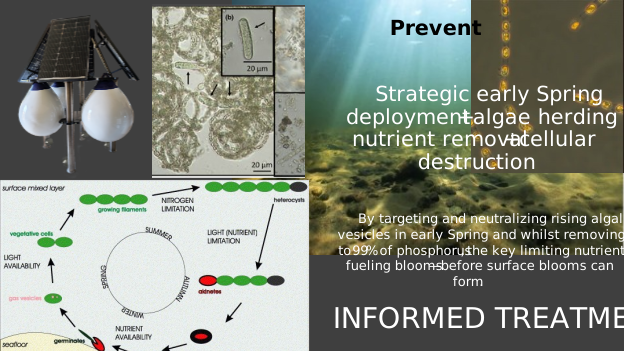
 Algal blooms are set up in spring, long before the water turns visibly green. Oxybot is launched early in the season and runs autonomous patrols 24/7, precisely when buoyant filaments and gas‑filled vesicles first begin to rise toward the surface. Through an electrophoresis‑driven innovation, Oxybot gently guides and gathers these microscopic algae at depth, intercepting them before they can organize into surface scums. At the same time, its aluminum treatment cell begins binding the dissolved phosphorus that would otherwise feed those blooms, leaving behind clearer, more oxygen‑rich water and helping restore natural balance without bulk Alum dumping or shoreline disturbance.
                         Physics‑Based Treatment, Not Chemicals

    Inside the platform, four coordinated processes work together in a closed, on‑board treatment train:

  1. Algae herding & capture
    A focused electric field guides negatively charged algal cells and particles toward the central intake, concentrating them where Oxybot can treat them efficiently instead of spreading them around the lake. This electrophoresis‑based herding keeps treatment targeted and minimizes collateral disturbance.
  2. Hydraulic cavitation
    Lake water is driven through a hydraulic cavitation chamber where microscopic bubbles form and collapse, creating intense micro‑shockwaves.

 These forces rupture algal cell walls, deflate buoyancy structures, and break apart the physical framework blooms need to reach and dominate the surface.

 3. Plasma oxidation
Inside the chamber, controlled electrical discharges generate powerful oxidants that attack photosynthetic pigments, reaction centers, and microbial toxins. Photosynthesis is halted, cells are inactivated, and cyanotoxins such as microcystins are degraded, without leaving persistent residues or harming fish and plants when operated within designed parameters.

4. Aluminum electrocoagulation (phosphorus removal) in Oxybot is achieved using a series of circular aluminum hoops mounted beneath the robot, carefully spaced to create both an electrophoresis “herding” effect and an in‑water electrocoagulation cell. As Oxybot applies an electric field, these hoops guide negatively charged algae and particles toward the robot pump intake while simultaneously releasing treatment‑strength aluminum into the water, where it rapidly forms tiny flocs.​

These aluminum flocs behave like a smart, mobile version of alum: they grab dissolved phosphate, bind it into stable aluminum phosphate minerals (variscite), and enmesh algae and other particles into a single floc stream that is drawn into the electro‑cavitation cell. Inside that cell, controlled cavitation and plasma forces rupture buoyancy structures and further compact the aluminum–phosphate–algae floc into smaller, denser particles that settle into the sediments while keeping phosphorus locked in mineral form, instead of returning to the water column. This mirrors the proven success of alum projects such as Lake Ketchum, State of Washington, USA—where internal phosphorus was reduced by over 90% and clarity dramatically improved—but Oxybot delivers the effect gradually, in place, and exactly where the lake needs it most

​Together, these four processes break the bloom engine at three levels: they intercept and neutralize cells, degrade toxins, and remove the key nutrient that would allow blooms to keep coming back.

   Together, these processes both neutralize harmful biology and remove the                      nutrient “fuel,” sharply reducing the risk of regrowth.

                                Continuous Sensing and AI Control

Oxybot is not just a treatment unit; it is also a moving monitoring station for your lake. On‑board sensors continuously scan for algal indicators, bacteria, nutrients, temperature, oxygen, and other key water‑quality drivers across depth, building a living picture of how conditions are changing over time.​

Data streams to the Lake Link cloud platform, where algorithms flag emerging hotspots, track trends, and adjust patrol routes and treatment intensity. After each treatment pass, Oxybot retests the water and refines its approach, closing the loop between measurement and action so that interventions are always guided by up‑to‑date conditions rather than fixed calendars or guesswork.

   This means the system learns your lake’s behavior over time and gets more                                                    effective each season.

                  From “Wait and React” to “Profile, Predict, Prevent”    

Traditional lake management waits for complaints, visible scums, or lab reports and then scrambles to respond with emergency measures. Oxybot inverts that model. By combining autonomous profiling, predictive analytics, and targeted, aluminum‑based physics treatment in one platform, Oxybot turns HAB and bacteria control into a planned, proactive program. Instead of waiting for the next crisis to find out what your lake is doing, you gain a continuous guardian that works quietly in the background—

-drawing on the same restoration principles used in standout success stories like Lake Ketchum, Washington State, USA,  but brought to life through modern robotics and automation. 


Frequently Asked Questions (FAQ)

How does Oxybot work?

Traditional lake management waits for complaints, visible scums, or lab results and then reacts. Oxybot reverses this by continuously profiling your lake, predicting where problems will emerge, and treating those zones before blooms and bacteria become a threat. By uniting autonomous monitoring, analytics, and targeted physics‑based treatment in one system, it turns HAB and bacteria control into a proactive, planned program instead of an emergency response cycle.

How does smart sensor technology and AI ensure my lake stays healthy?

Oxybot uses high‑precision multiparameter sensors to continuously measure algae, bacteria, toxins, nutrients, and core water‑quality drivers across the full water column. Each deployment produces quality‑controlled time‑series and vertical profiles that are structured to leading global monitoring practices and harmonized with the LakeBeD‑US benchmark dataset, making the data directly comparable to published lake observatory records.​

All measurements are streamed to the Lake Link cloud and your smartphone in near real time, while the data architecture follows FAIR principles—findable, accessible, interoperable, and reusable—consistent with the stewardship guidelines outlined by Wilkinson et al. (2016). The onboard AI then analyzes these LakeBeD‑aligned datasets to detect pattern changes, flag hotspots, and automatically decide where and when to treat, keeping your lake safe, clear, and ready for advanced research or regulatory reporting.

Is your algae prevention method safe for people, pets, and fish?

Oxybot does not add algaecides or broad residual chemicals to the lake. Instead, it uses controlled hydraulic and electro‑cavitation plus plasma oxidation inside a contained treatment chamber to rupture harmful algal cells and neutralize toxins before returning treated water to the lake. The system also uses aluminum‑based electrocoagulation to bind dissolved phosphorus into stable mineral forms—functioning as a more precise, on‑board version of alum, the same restoration chemistry that has been used extensively and successfully in lakes such as Lake Ketchum in Washington State.​

Because treatment happens within the device and relies on short‑lived physical and electrochemical processes, there are no long‑lasting residues in the water column, and the aluminum–phosphate minerals that form are similar to those found in healthy sediments. The approach is engineered to preserve overall ecosystem balance while targeting harmful algae and bacteria, gradually reducing the nutrient pool that drives blooms rather than introducing new contaminants

Oxybot Area Coverage—How Much Water Can One Unit Protect?

Each Oxybot is engineered to protect roughly 1–2 acres of lake surface per 24‑hour operating day under typical conditions, circulating water through its onboard treatment chamber to neutralize algae and bacteria and remove nutrients within its patrol zone. The robot continually moves through its assigned area, focusing effort where risks are highest—shorelines, inlets, and shallow, warmer zones where blooms and bacteria tend to emerge first.

For larger lakes, resorts, or long shorelines, multiple Oxybots can be deployed as a coordinated swarm. Operating together, they expand total coverage, increase treatment capacity, and ensure that every key sector of the lake receives proactive, autonomous protection rather than sporadic, manual intervention.

What new lake survey technologies are coming from Ion Works Inc?


Ion Works is launching OXYBOT Pro in March 2026 as a fully autonomous, AI‑driven profiling buoy for whole‑lake and reservoir monitoring. It carries a multiparameter sensor suite and a WiFi‑controlled instrument winch that run grid‑based vertical profiles, producing QA/QC‑validated, machine‑learning‑ready datasets aligned with LakeBeD‑US style research standards for oxygen, nutrients, bloom risk, and overall lake health.​​

By replacing manual survey campaigns with continuous, autonomous profiling, OXYBOT Pro gives limnologists, consultants, municipalities, and conservation groups high‑resolution data they can plug directly into models, management plans, and compliance reporting, maximizing the impact of every monitoring dollar.

Download OXYBOT PRO Data sheet 

Will Oxybot eliminate all algae blooms in the first year? Why are repeated spring and summer deployments needed?

Oxybot is designed to reduce the frequency and severity of harmful blooms over time, not to guarantee that all algae disappear in the first season. Harmful species often persist as durable resting stages (such as akinetes) in lake sediments and can survive for years, re‑seeding the water column each spring when light and temperature conditions improve. Even with aggressive early‑season control, some of these resting cells can still rise and trigger patches of growth in year one.

Repeated spring and summer deployments are therefore essential. Each season, Oxybot intercepts and destroys newly rising vesicles and filaments at depth, progressively depleting the lake’s “seed bank” of harmful algae and reducing the likelihood of intense blooms in subsequent years. Over multiple cycles, this systematic pressure on early‑stage cells drives down bloom intensity and duration rather than allowing the same pattern to repeat every summer.

At the same time, Oxybot’s Aluminium‑based electrocoagulation module removes dissolved phosphorus from the water column by binding it into stable mineral forms on the lakebed, cutting off the nutrient supply that would otherwise fuel rapid regrowth after initial control. Combining ongoing biological disruption with proactive nutrient removal makes each year’s deployment more effective than the last and supports a long‑term shift toward clearer, more stable lake conditions, instead of promising a one‑season “silver bullet.

While Oxybot is a multi‑year solution rather than a one‑season fix, each deployment replaces a significant amount of manual sampling, boat time, and reactive call‑outs. In most programs, labor and logistics consume 40–60% of remediation budgets, so shifting this work to autonomous robots allows communities to pursue sustained, multi‑year bloom control without increasing overall costs.

How does Oxybot support long-term lake recovery, and what happens to nutrients on the lake bottom?

 In addition to neutralizing algae and pathogens, Oxybot is engineered to remove dissolved nutrients—especially phosphorus—that drive recurring blooms. Its integrated aluminum electrocoagulation cell binds bioavailable phosphate and converts it into stable mineral forms, helping shift the lake from a bloom‑prone state toward long‑term recovery.​

Water passes through the aluminum cell, where a low electric current releases aluminum ions from shaped electrodes. These ions act as coagulants, rapidly binding with dissolved phosphate to form insoluble aluminum phosphate minerals such as variscite (AlPO₄·2H₂O), which settle into the sediments as stable, non‑toxic compounds similar to those found in healthy lakes.​

Aluminum electrocoagulation is widely regarded as environmentally sound when properly controlled because it does not introduce persistent synthetic chemicals; instead, it accelerates a mineral‑binding process that is already used in successful alum‑treated lakes. With repeated spring and summer deployments, Oxybot not only suppresses active blooms but also steadily reduces the internal phosphorus pool, supporting the return of clearer water, more stable oxygen conditions, and the re‑establishment of beneficial aquatic plants and algae that further lock nutrients in place

Can Oxybot remove nutrients, like phosphorus, as well as kill algae? How does the Aluminium cell work, and is it safe for lakes?

In addition to destroying harmful algae and pathogens, Oxybot includes an aluminum‑based electrocoagulation cell that actively removes dissolved phosphorus from the water, using the same core chemistry that underpins successful alum lake restorations. After cavitation and plasma processes neutralize problematic cells, a low electric current releases aluminum ions (Al³⁺) from shaped electrodes, which rapidly bind with dissolved phosphate (PO₄³⁻) to form insoluble aluminum phosphate minerals such as variscite (AlPO₄·2H₂O).​

As this aluminum–phosphate settles into the sediments and hydrates, it creates a stable mineral layer that locks phosphorus away long term and prevents it from being recycled back into the water column, helping the lake move out of its bloom‑driven state. Because the process uses aluminum in carefully controlled doses—building on decades of alum use in lakes like Lake Ketchum, Washington— and produces minerals that mimic natural sediment chemistry, the method is considered environmentally sound when properly engineered and monitored, improving clarity while supporting a more balanced, self‑sustaining lake ecosystem.

Download Aluminium Cell Info Sheet

Methanotrophic Bacteria and Lake Restoration

Lakes naturally contain methanotrophic bacteria—microbes that consume methane before it reaches the atmosphere and convert it into biomass and carbon dioxide, especially where oxygen‑rich and oxygen‑poor waters meet. These communities are highly sensitive to oxygen levels: when deep water becomes severely depleted, methanotrophs lose effectiveness and more methane escapes upward as bubbles.​

Oxybot supports these “methane‑eating” microbes by adding fine‑scale aeration and gentle circulation in targeted deep‑water zones, raising dissolved oxygen just enough to sustain methanotrophic activity without fully breaking down natural stratification. Under these more stable conditions, methane is more likely to be oxidized in place as it is produced in the sediments, reducing the amount that vents directly to the atmosphere.​

At the same time, Oxybot’s aluminum‑based phosphorus‑removal process reduces algal overgrowth, which lowers the amount of organic material raining down to the bottom and driving oxygen loss. Together, these effects help shape a microbial community that favors methanotrophy and long‑term lake recovery, without relying on heavy infrastructure or broad, one‑time chemical applications. In simple terms, Oxybot is designed to stabilize the crucial transition zone between oxygenated and low‑oxygen water—where aerobic and microaerophilic methanotrophs are most active—rather than erasing this zone altogether.

Autonomous Alum‑Grade Aluminum Electrocoagulation

a-review-on-the-use-and-monitoring-of-alum-treatments-to-control-internal-phosphorus-loading-in-lakes 

Protect Your Lake. Protect What It’s Worth

Contact Us

Contact

Ion Works Inc (Cedar Aquaculture Research and Development Facility)
3145 Headland Road
Nanaimo, British Columbia V9X1N8, Canada
Oxybot Robotics 250 466 2016
Oxybot Robotics 250 729 5428
Email lawrence@ionworks.ca

Hours

Mon–Fri: By Appointment
Sat–Sun: Closed

Connect

Patent

USPTO Patents Pending

© 2026 Ion Works Ltd Powered by Jottful Image credits
Image by Domas on PEXELS